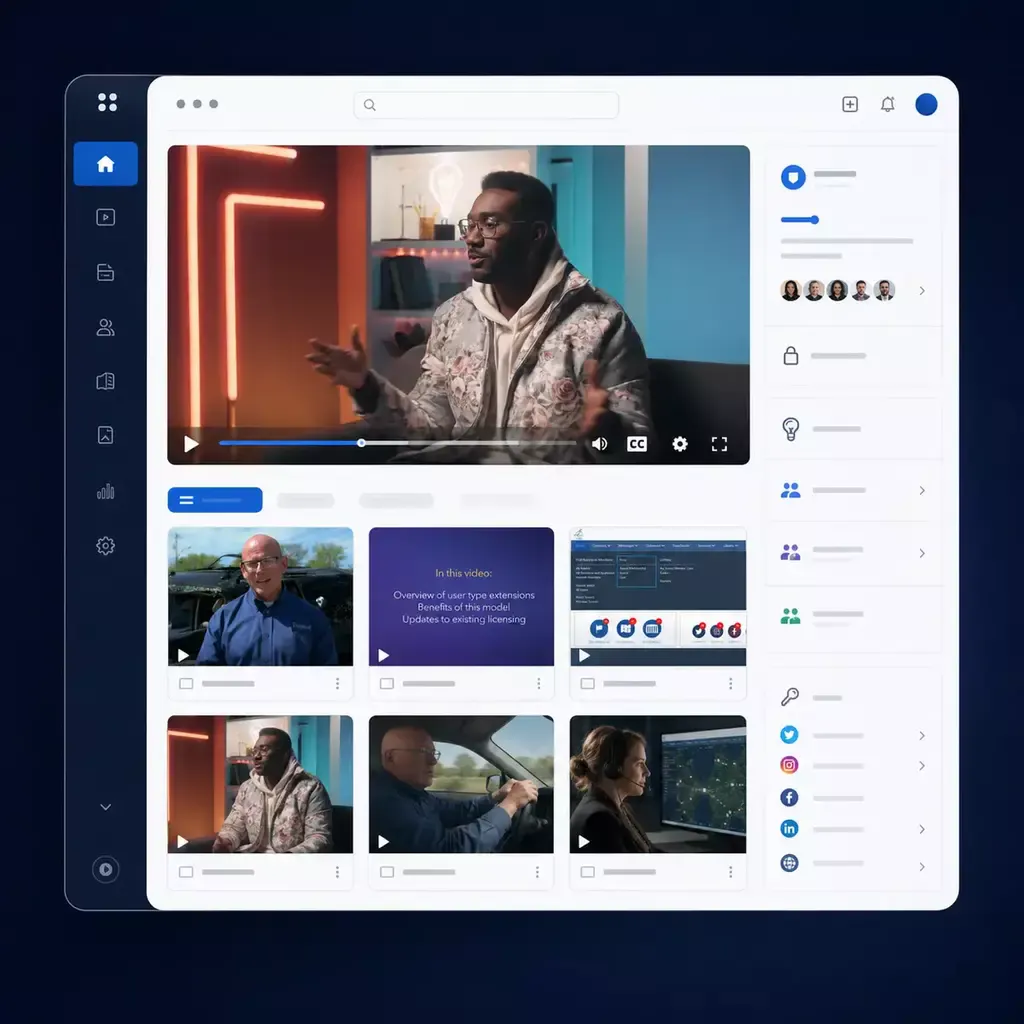
Launch one structured destination where users can browse by workspace and channel, return to where they left off, follow training paths, and access the right knowledge by permission.
Tube is the portal-style product shape for customer academies, structured training portals, and controlled knowledge hubs. It gives teams a real environment for ongoing video knowledge use instead of a one-time page or a pile of embeds.
Tube is the portal-style product model inside Cincopa for structured video knowledge environments.
It gives one team or program a persistent destination with workspace navigation, channel structure, user identity, repeat-usage behavior, and room for the library to grow over time.
Tube works when the rollout needs a real portal with browse paths, search, repeat visits, and ongoing content growth instead of a single page or a one-time embed.
Workspaces organize the environment. Channels group content by program, product area, role, workflow, or recurring series so the library stays usable as it grows.
Watch history, resume watching, saved items, subscriptions, notifications, and optional sequential behavior make the portal more useful over time, not just on first visit.
Many teams already have the videos. What they do not have is the right environment to keep those videos organized, controlled, reusable, and easy to return to as the audience and the library both grow.
Once content expands across products, modules, releases, workshops, or user groups, a flat video list becomes hard to browse and even harder to trust.
Recorded webinars, release briefings, and training sessions often exist, but they stop being usable because the environment was never built to retain and surface them.
Academy learners, internal teams, and selected partners often need different entry points, permissions, and management roles even when the knowledge lives in one broader system.
When users come back often, watch history, resume behavior, channel subscriptions, and structured navigation stop being nice extras and start becoming part of the product value.
Use the same Tube foundation to support customer academies, controlled team hubs, departmental portals, and recurring workshop archives without rebuilding the experience from scratch each time.
Tube is the strongest fit when one environment needs multiple channels, user groups, role-based access, repeat viewer behavior, and room to keep growing without losing clarity.
Start with Tube when one audience is not enough and the environment needs workspace navigation, channel logic, and deeper portal behavior.
Use Tube when the goal is not mainly embedded delivery. Tube is for the cases where the knowledge needs its own place users return to again and again.
User groups and role-based permissions help keep one portal controlled as more viewers, teams, and managers enter the environment.
Watch history, resume behavior, subscriptions, notifications, and optional sequential mode make Tube stronger for programs users revisit over time.
One team needs one branded, hosted, measurable destination and a flatter structure is enough.
The audience needs channel-based navigation, ongoing portal behavior, deeper permissions, and a knowledge environment that keeps expanding without becoming a mess.
Tube follows a clear operating pattern: create the environment, organize the channels, match access to the audience, help users consume the library through browsing and Q&A, and keep the knowledge usable as it grows.
That structure is what makes the portal readable for users and manageable for teams as the environment expands across programs, departments, or recurring content tracks.
Use workspaces to organize the environment by team, program, department, audience, or business context so the portal has clear boundaries from the start.
Channels can organize onboarding, product training, troubleshooting, release updates, recorded meetings, or recurring webinar series so the library behaves like a program, not a dump.
User groups and role-based permissions help teams manage workspace access, channel access, and administrative responsibility as the environment becomes more shared and more important.
Tube works best when users can move between structured channel browsing and VideoGPT across the broader library. Some viewers follow channels and playlists. Others search, ask questions, and jump straight to the right lesson, update, or supporting source.
Watch history, resume watching, saved items, subscriptions, notifications, and optional linear learning mode help the portal behave like an environment users come back to with context still intact.
Tube can support automated ingestion such as Zoom recordings into channels, include externally hosted videos where useful, and keep VideoGPT operating across the growing workspace knowledge library.
Tube is strongest when structure, controlled access, and intelligence all work together. That is how one portal stays useful even as the audience, content volume, and operational demands all increase.
Use workspace and channel logic to organize by team, role, program, topic, product line, or recurring series instead of forcing users through one flat content path.
Viewer, editor, admin, and owner roles can vary by workspace or channel, which makes it easier to decide who sees what, who edits what, and how the portal stays governed over time.
VideoGPT can operate across the workspace library, while viewer analytics, recurring questions, and weak-answer signals help teams see what people still need and what content should improve next.
Tube is reusable because the same portal model can support different knowledge jobs without forcing them into the same delivery logic.
Create a public or controlled training portal with channel-based learning, repeat viewer behavior, and VideoGPT across the academy.
Organize onboarding, certification, product training, or release education into one environment that is easier to navigate than a flat LMS video layer.
Give teams a private portal for workshops, briefings, operational training, and reusable institutional knowledge that needs to stay searchable and controlled.
Keep recurring sessions usable after the event by routing them into channels, preserving watch continuity, and letting users retrieve the answer later instead of searching drives.
Leidos shows how Tube can support both a public customer training portal and a controlled internal knowledge environment around the same product ecosystem.
Why the fit is strong
A large operational archive for training modules, quick tips, release updates, webinars, and workshops.
Supporting documents stay attached to the environment instead of getting lost in separate systems.
Why the fit is strong
Tube is not limited to a single academy rollout. It is a reusable portal model for customer training, structured learning, and controlled internal knowledge hubs.
The FAQ should help buyers understand the product shape fast: where Tube fits, what it is not, and when it becomes the right delivery model.
Tube is the portal-style product model for structured video knowledge environments. It organizes content through workspaces and channels and supports the repeat-viewer behavior that lighter delivery models often lack.
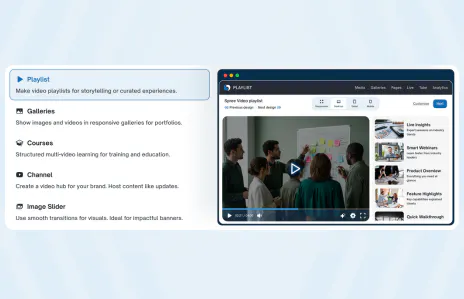
A Page is a focused hosted destination. Tube is deeper and more portal-like. Use Tube when one environment needs channel-based navigation, watch history, user groups, and richer portal behavior over time.
Tube can feel familiar because it gives users a portal-style browsing experience with channels, featured content, watch history, and a destination they can return to. But it is built for structured video knowledge, not consumer media. Teams use Tube for customer academies, structured training portals, and controlled internal knowledge hubs where permissions, user groups, repeat viewing, and ongoing knowledge access matter.
Galleries are the reusable collection and embedded delivery layer. Tube is the destination environment for cases where the library needs its own portal, not just an embedded knowledge surface.
Yes. Tube can support public customer academies, controlled departmental portals, and private knowledge hubs depending on the audience and the access model the rollout requires.
Yes. Channels can support optional sequential learning, while watch history and resume watching help users continue where they left off without losing context.
Yes. Tube is a strong fit for recurring webinar, workshop, and training environments because channels can keep evolving and automated ingestion such as Zoom recordings can feed new content into the portal.
VideoGPT is the supporting intelligence layer across the Tube environment. Users can ask across the workspace library, get grounded answers, and jump to the right moment or source without changing the portal-first story.
Yes. Tube is the updated name for what many Cincopa customers know as CincoTube. It is Cincopa’s portal-style video knowledge environment for structured libraries, training portals, customer academies, internal knowledge hubs, and controlled video destinations. Tube supports workspaces, channels, permissions, watch history, viewer engagement, and VideoGPT across the portal so users can browse, continue watching, and ask questions across the knowledge library.
Start with one customer academy, one structured training portal, one controlled team hub, or one recurring knowledge archive. Then expand once the first Tube environment proves value.