Platform - Pages Platform - Pages

Launch one branded video knowledge page—without building a portal

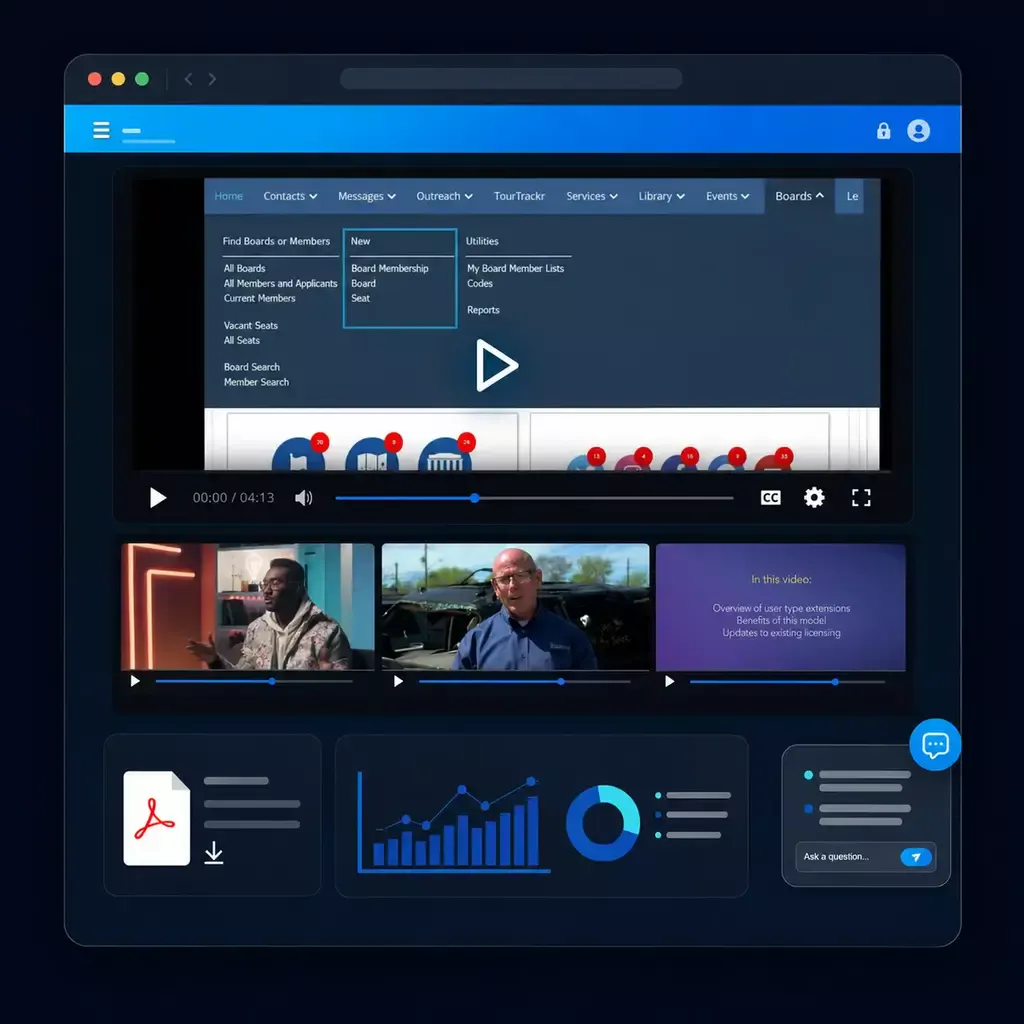
Combine video, supporting documents, access controls, analytics, and VideoGPT in one focused hosted destination for training, onboarding, partner education, or support.

  • Branded and hosted
  • Access controlled
  • Measurable
Branded hosted video page with supporting documents, access controls, analytics, and an AI assistant

What Pages are

More than a page shell. More than a wrapper around a gallery.

A Page is a hosted destination built around structured video knowledge.

It gives one program, one team, or one audience a dedicated place to browse, watch, ask, and retrieve knowledge with its own branding, access model, analytics context, hosted delivery layer, and optional VideoGPT Assistant.

Hosted destination

Give the rollout its own home

Launch a dedicated destination with its own domain or CNAME, page-level experience, and focused audience path instead of sending people into a generic library or a scattered set of embeds.

Controlled experience

Match access to the audience

Pages work well when delivery needs to be public, gated, or controlled without the extra complexity of a full workspace-and-channel portal.

Measurable rollout

See engagement in context

Track viewer behavior, page performance, and knowledge interactions around a specific program so teams can see what gets used, what gets missed, and what needs work next.

Why teams choose Pages

Give each rollout a destination people can trust and return to

When training, guidance, and supporting documents are scattered across embeds, files, and disconnected pages, people lose the path. Pages bring the content, the access model, and the experience together in one place.

Embeds are not always enough

A gallery inside a page is powerful, but some programs need their own branded destination, not just one more component inside another system.

Full portals can be too much

Not every rollout needs workspaces, channels, and full portal behavior. Many teams need something lighter, faster, and more focused.

Access and audience still matter

A public education series, a partner program, and an internal library should not all behave the same way. The destination layer has to reflect the audience logic.

The rollout needs feedback

If the page cannot show who engaged, where people dropped off, or what they kept asking, the team has a harder time improving the program.

A better way to launch

One product shape for focused knowledge rollouts

Use the same core content and knowledge layer to launch the destination that fits the audience, the program, and the access needs without rebuilding everything from scratch.

How Pages work

Bring content, access, and guidance together in one hosted destination

At a high level, Pages work like this: organize the content, publish it as a dedicated destination, match access to the audience, then learn from how people use it and keep improving the experience.

Core Page capabilities
Where Pages fit best

Structure, access, and intelligence

The strongest Pages bring together three essentials

Most successful Pages combine organized content, the right access model, and a smarter way to help people find answers inside the destination.

VideoGPT on Pages

Add a floating assistant to the hosted destination

Pages are built to give a rollout its own destination. VideoGPT can support that destination as a floating assistant that helps visitors understand what is available, ask questions, and reach the exact video moment or supporting document that answers them.

On a Page, VideoGPT can answer from the gallery or single video hosted on that Page. The assistant can also be configured to open automatically so visitors immediately see a welcome message and suggested questions instead of landing on a destination with no clear starting point.

Deployment shapes

Five common ways teams use Pages

Pages are strongest when one audience needs one destination with one clear job to do. Start with the rollout shape that matches that need.

Customer proof

Used in real training and knowledge rollouts

Pages already support real customer environments where teams need a branded destination, a clear audience path, and a lighter alternative to a full portal.
Customer proof

Leidos

Pages alongside embedded education and portal environments

Leidos uses Cincopa across multiple knowledge environments, including embedded product education galleries, standalone training Pages, a public training portal, and a private internal knowledge portal. Pages give the team a dedicated destination when the rollout needs more structure than an embed but does not need to become the whole portal experience.

How Pages fit

  • Support dedicated training and education destinations inside a larger rollout
  • Sit alongside embeds and portal environments without replacing them
  • Give different audiences the experience that fits them best

Why it matters

  • Product education often needs a destination, not only embeds
  • Training rollouts often need something lighter than a full portal
  • Controlled delivery and analytics matter across separate audiences
View more
Program education

Virginia Housing

Focused program education and public-facing learning

Virginia Housing supports the same Pages story in a different context: focused training for specific audiences and public educational delivery built around structured video content.

View more
What teams can take from this
Frequently asked questions
Common questions about Pages
These are the questions teams usually ask when deciding between a hosted Page, an embedded library, and a full portal.
Next step

Launch a Page people can actually use

Start with one course page, one partner program, one product education destination, one public series, or one lighter controlled library. Then build on the same platform foundation as your rollout grows.