Product education vs Customer Education vs Customer Training: What's the Difference?

Product education, customer education and customer training are closely related terms. Teams often use them interchangeably, but they do not always describe the same job. Product education helps people understand and use a specific product. Customer education is the broader practice of helping customers build the knowledge they need to succeed. Customer training is a more structured learning experience, often organized into courses, lessons or guided programs.

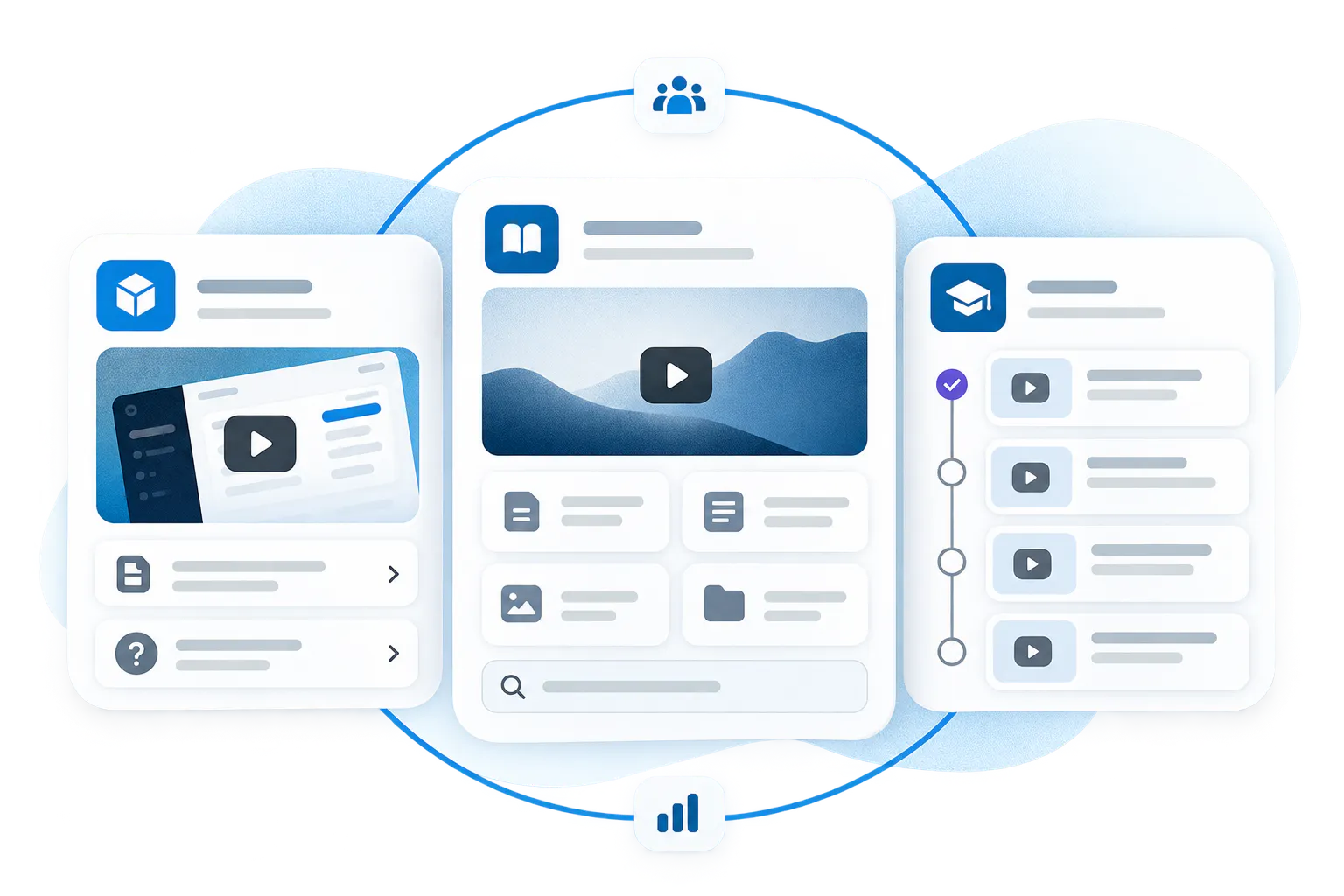
Article Hero Graphic

What Is Product Education?

Product education teaches people how to understand and use a product.

It focuses on features, workflows, setup, configuration, updates and practical product use.

Product education may include:

  • Getting-started videos
  • Feature walkthroughs
  • Product demonstrations
  • Setup guides
  • Workflow instructions
  • Release-update explanations
  • Troubleshooting content
  • Help-center articles
  • Supporting documents

The goal is to help users complete tasks inside the product with confidence and minimal friction.
When Product Education Is Most Useful

Product education is most effective when users need quick, practical guidance to accomplish specific goals.

  • Onboarding new users to core features
  • Showing how to use newly released functionality
  • Answering common how-to questions with short video guides
  • Reducing repetitive support tickets with self-serve content
  • Helping users troubleshoot workflows independently

What Is Customer Education?

Customer education is a broader practice than product education.

While product education focuses on how the tool works, customer education focuses on why the customer uses it and how they can achieve meaningful outcomes.

"While product education teaches users how the tool works, customer education teaches them how to succeed in their role using the tool as an enabler."
Donna Weber Customer Onboarding & Education Strategist

It combines product knowledge with industry best practices, strategic guidance and practical frameworks.

Customer education content often includes:

  • Video academies covering industry fundamentals
  • Webinars on strategic challenges and best practices
  • Resource hubs with downloadable templates and guides
  • Thought-leadership content that helps customers level up
  • Case studies and practical workflows from experienced peers

The goal of customer education is long-term customer success, retention and expansion.

When Customer Education Is Most Useful

Customer education is most valuable when product adoption alone does not guarantee success.

  • Helping customers develop skills beyond the product itself
  • Building deeper trust and authority in your category
  • Increasing customer retention by connecting product use to business outcomes
  • Scaling customer success efforts through on-demand learning hubs
  • Supporting account growth and expansion through mature product usage
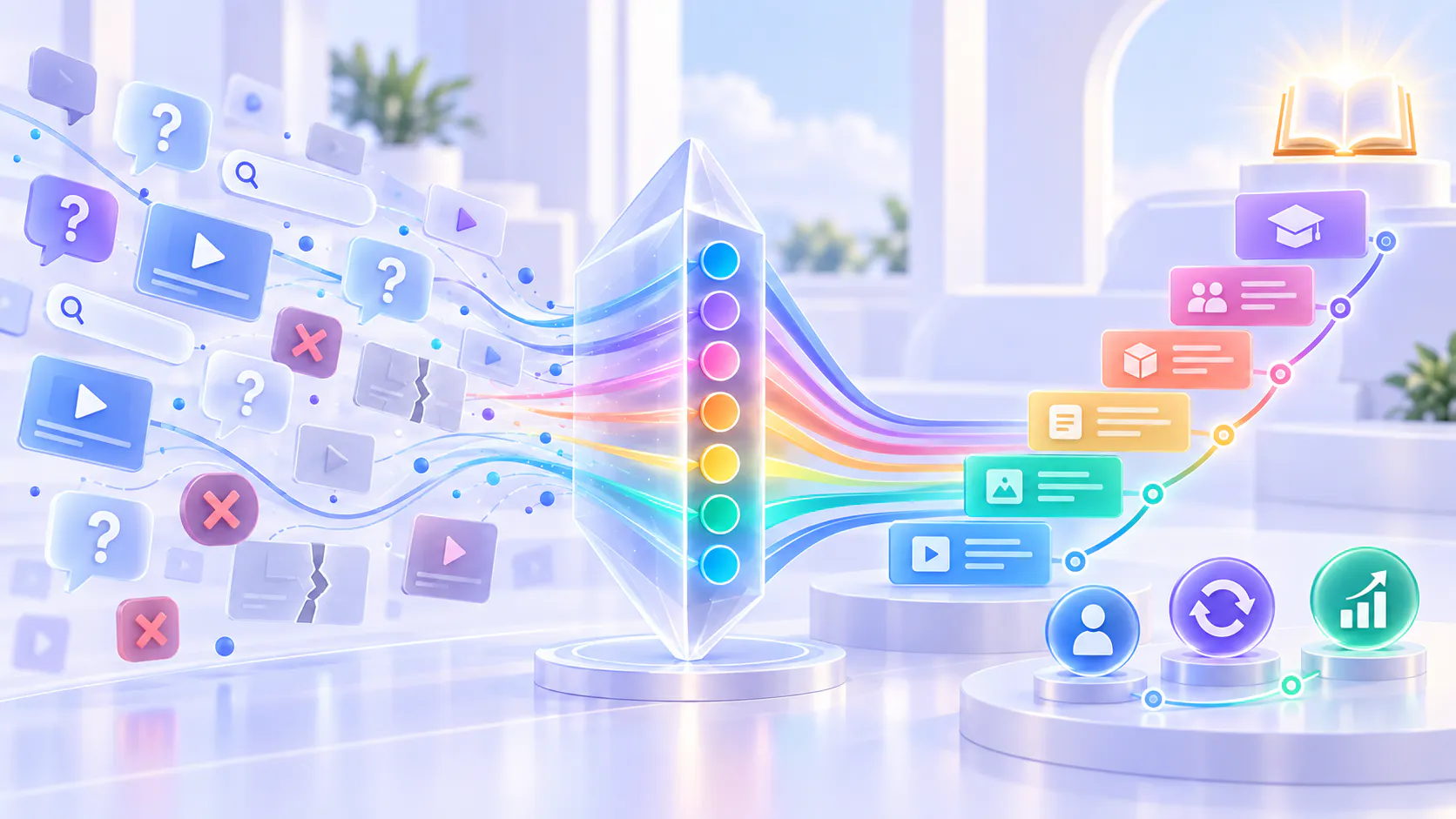
Figure 1: Structuring customer education around role-based milestones rather than feature lists drives 3x higher 90-day retention.

What Is Customer Training?

Customer training is structured, formal learning designed to take learners through a defined curriculum.

Unlike self-serve help articles or broad thought leadership, training typically follows an intentional sequence with specific learning objectives, milestones and assessments.

Customer training formats often include:

  • Structured learning paths with sequential modules
  • Certification programs with formal assessments
  • Live instructor-led training (ILT) or virtual ILT sessions
  • Cohort-based onboarding programs for enterprise teams
  • Accreditation tracks for partners and administrators

The goal is structured competence, verified skill acquisition and standardized proficiency.

When Customer Training Is Most Useful

Customer training is essential when customers require formal validation, complex onboarding or role-specific specialization.

  • Complex software implementations requiring structured onboarding
  • Regulated industries where compliance training must be documented
  • Partner certification programs that authorize implementation rights
  • Enterprise deployments where standardized training ensures consistency
  • Organizations where teams need verifiable skill credentials

The Main Differences

Understanding how each discipline differs helps teams allocate resources effectively:

Dimension
Product education
Customer Education
Customer training
Primary Goal
Feature adoption & task completion
Strategic competence & mastery
Formal certification & compliance
Target Audience
Active users & trial accounts
Decision-makers & power users
Designated admins & technicians
Typical Format
Micro-guides, tips & 2-min clips
Playbooks, hubs & academies
Structured courses & tests
Key Metric
Feature adoption & deflection
Gross retention & NRR growth
Course completion & test pass
Delivery Surface
In-app modals & player embeds
Branded video knowledge Pages
Enterprise LMS tracks & webinars
Primary Goal
Product education
Feature adoption & task completion
Customer Education
Strategic competence & mastery
Customer training
Formal certification & compliance
Target Audience
Product education
Active users & trial accounts
Customer Education
Decision-makers & power users
Customer training
Designated admins & technicians
Typical Format
Product education
Micro-guides, tips & 2-min clips
Customer Education
Playbooks, hubs & academies
Customer training
Structured courses & tests
Key Metric
Product education
Feature adoption & deflection
Customer Education
Gross retention & NRR growth
Customer training
Course completion & test pass
Delivery Surface
Product education
In-app modals & player embeds
Customer Education
Branded video knowledge Pages
Customer training
Enterprise LMS tracks & webinars

Scope

Product education focuses on the tool itself. Customer education encompasses broader industry knowledge and outcomes. Customer training focuses on structured mastery of specific competencies.

Format

Product education uses bite-sized, modular assets (videos, articles, tooltips). Customer education uses diverse formats including webinars, guides, podcasts and academies. Customer training relies on structured courses, quizzes and assessments.

Measurement

Product education tracks feature adoption, ticket deflection and time-to-value. Customer education measures retention, product expansion and customer lifetime value. Customer training tracks completion rates, test scores and certifications.

A Practical Example

Consider how each approach applies to a video hosting platform:

How the three approaches address video hosting:

  • Product Education: A 90-second video demonstrating how to upload a video, generate an embed code and adjust player settings.
  • Customer Education: A webinar series explaining how enterprise marketing teams use video analytics to qualify leads and personalize sales outreach.
  • Customer Training: A multi-module certification course that teaches video administrators how to configure SSO, set up compliance rules and manage brand portals.

Do Not Force Every Need into One Category

Organizations frequently make the mistake of choosing just one model and forcing all content into it.

A user who encounters a setup error does not want to enroll in a multi-lesson course — they need a 60-second product walkthrough.

Conversely, an enterprise administrator responsible for organization-wide governance cannot rely on scattered tooltips — they need a structured training curriculum.

Recognizing which learning job your customer has at any given moment prevents friction and drives adoption.

How the Three Can Work Together

High-performing customer experience teams do not treat these three disciplines as competing alternatives. Instead, they build an integrated learning ecosystem:

  • Product education provides immediate self-service answers directly inside workflows.
  • Customer training ensures thorough, structured onboarding for new accounts and administrators.
  • Customer education inspires strategic growth, skill expansion and community learning as their needs mature.

When connected well, they create a continuous learning journey rather than disconnected content silos.

Choose the Right Delivery Model

Rather than debating terminology, teams should evaluate their content based on user needs:

  • Does the user need quick reference or structured instruction?
  • Will the user watch once or return repeatedly?
  • Is the knowledge organized around features, workflows or broader outcomes?
  • Are videos supported by documents, guides and transcripts?
  • Is completion tracking required, or is open discovery more valuable?

Where Cincopa Fits

Cincopa provides the video infrastructure that supports modern product education, customer education and training initiatives.

Whether you are embedding short feature walkthroughs inside your application, publishing on-demand video academies or organizing structured training modules, Cincopa enables teams to:

  • Host and manage video, audio and document libraries in one secure location
  • Create branded, searchable video portals and course galleries
  • Add chapters, closed captions and interactive navigation to make long videos easy to scan
  • Deliver video across help centers, LMS environments, client portals and public websites
  • Track learner engagement with second-by-second viewer analytics

Questions to Ask Before Choosing a Category

Before naming or building a program, ask:

  • Is the main goal to teach people how to use the product?
  • Does the learning extend into industry knowledge or best practices?
  • Must users follow a defined sequence?
  • Are assessments or certificates required?
  • Do users need quick answers while they work?
  • Will they need to revisit the knowledge later?
  • Does important knowledge live in videos and supporting documents?
  • Is completion tracking necessary?
  • Are different roles learning different workflows?

Start with the Learning JobStart with the Learning Job

Titles and taxonomy matter less than the learning outcome.

Start by understanding the job your users are trying to do: solve a problem, master a feature, understand a strategy or earn a qualification.

When you design for the learning job, product education, customer education and customer training will naturally fall into place.

NEXT STEP

Start with one product area, one support library, or one training flow

Start with one product area, one documentation surface, one support library, one internal portal, or one embedded training flow. Get that collection working well, help viewers understand what is inside, then reuse the same gallery across adjacent destinations without duplicating the library.